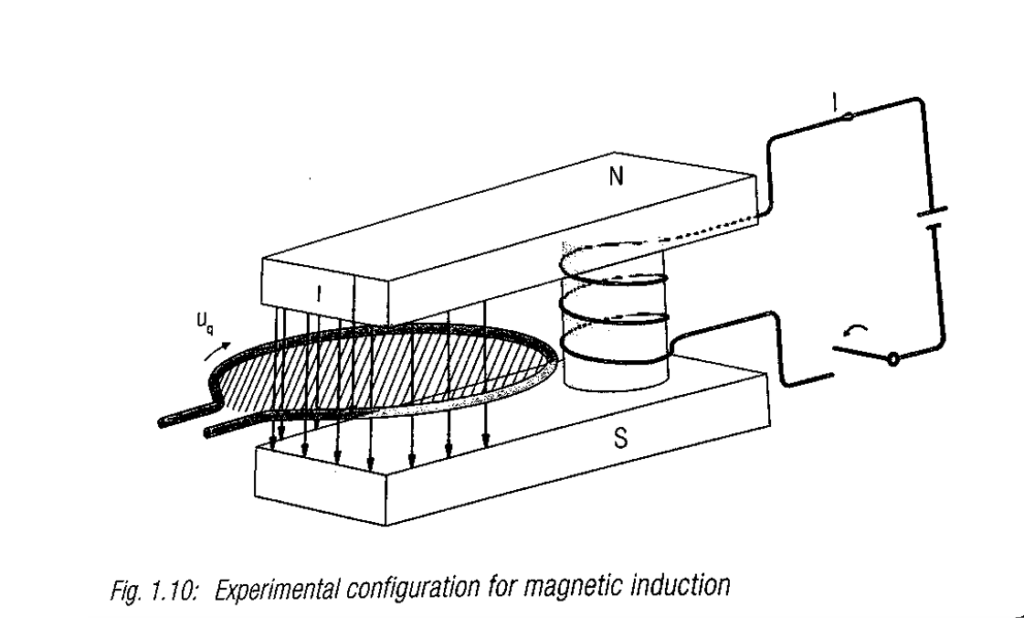
Magnets are characterized by their magnetic field density which is the number of magnetic flux lines that pass perpendicularly through a defined area. If the magnetic field passing through the conductor loop changes with time it will create a potential in the conductor loop (Uq in the image below).
Brander, T. (2010). Trilogy of Magnetics: Design guide for EMI filter design, SMPS & RF circuits (5th ed., p. 20). Würth Elektronik.
The Hall Effect
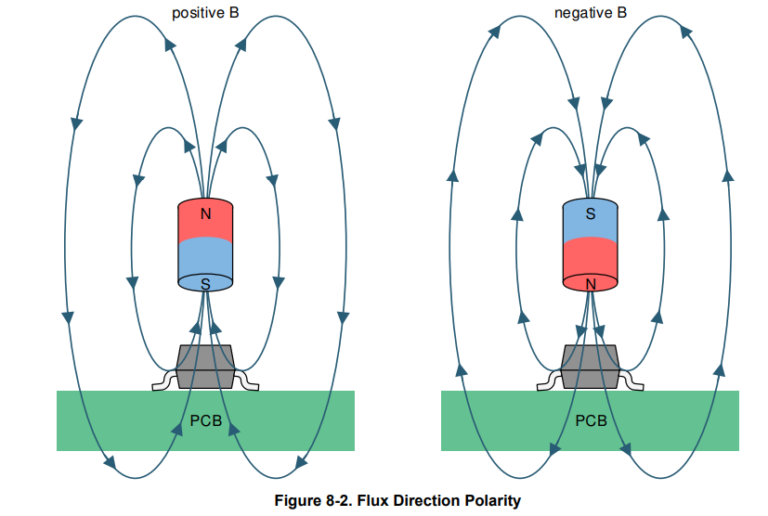
The hall effect is the physical phenomenon that happens when a voltage is generated across a conductor as a result of an imposing magnetic field. It follows Lenz’s Law where an imposed magnetic field induces a current in the direction such that its induced magnetic field opposes the imposed field. To use the hall effect, a conductor should have a current running through it and it should be oriented in such a way that when the magnetic field is imposed the current it generates is in the opposite direction, stopping the flow of current and creating a voltage difference.
Hall Effect Sensors
The TMAG5321 uses an omnipolar design, enabling it to sense electromagnetic fields in positive and negative polarity with respect to it’s internal conductor. When the applied magnetic flux density exceeds the defined threshold, will drive the output voltage low.
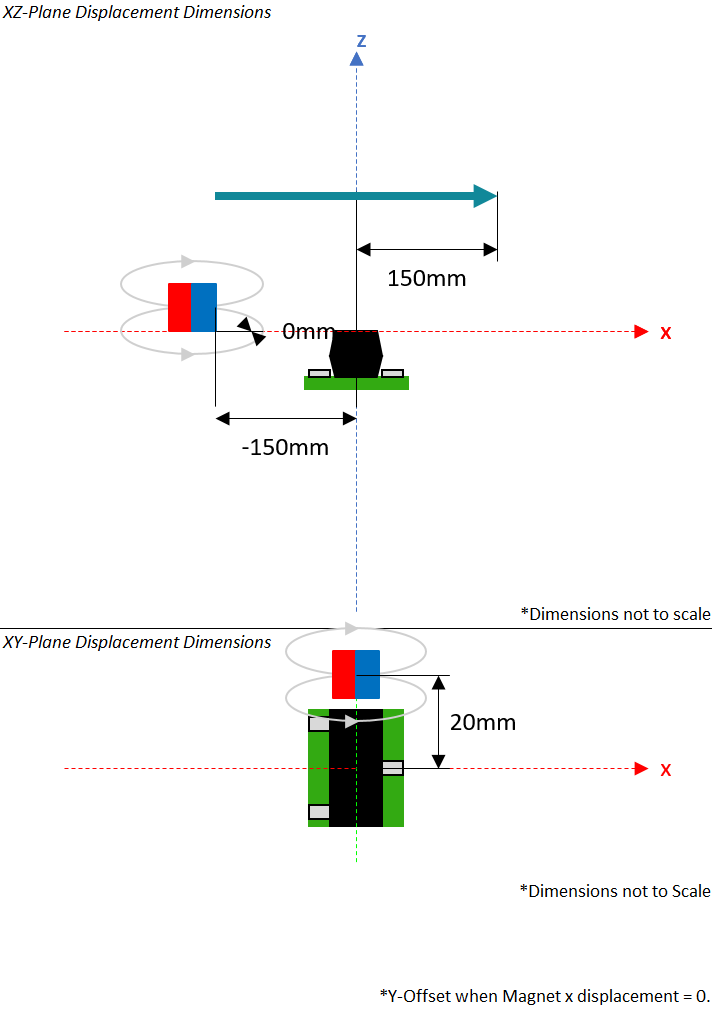
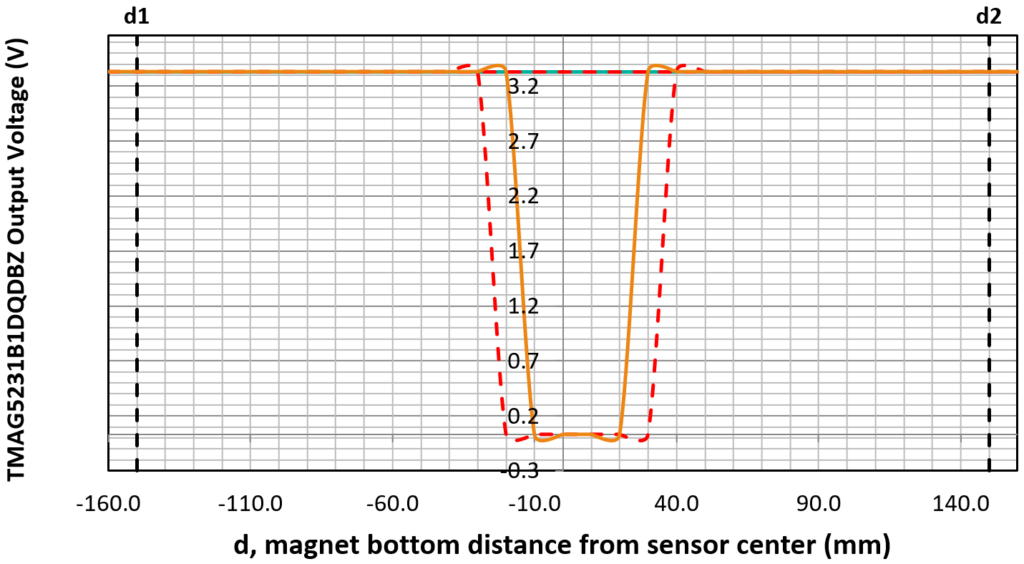
I setup a “flyby” scenario in the Magnetic Sensing Proximity Tool from Texas Instruments (https://www.ti.com/tool/download/HALL-PROXIMITY-DESIGN) where the magnet travels in a straight line 20mm away from the sensor and saw that it should output a low voltage for me to detect!
The tool found that the sensor with a threshold of 0.3mT worked well with a neodymium magnet with a flux density of 1.37T. And it worked perfectly! When I bring the magnet within 40mm the sensor outputs a 0!
This gave me the confidence to put the sensor on my circuit board.
Implementation
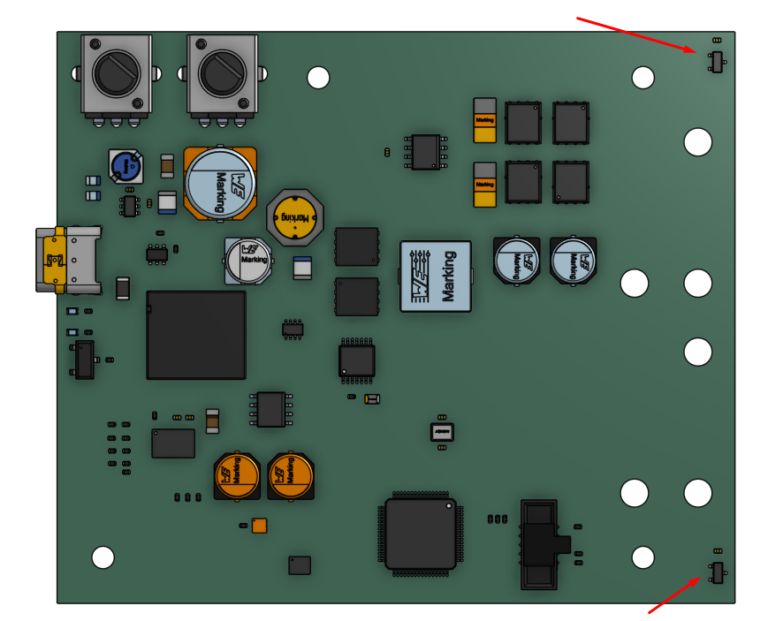
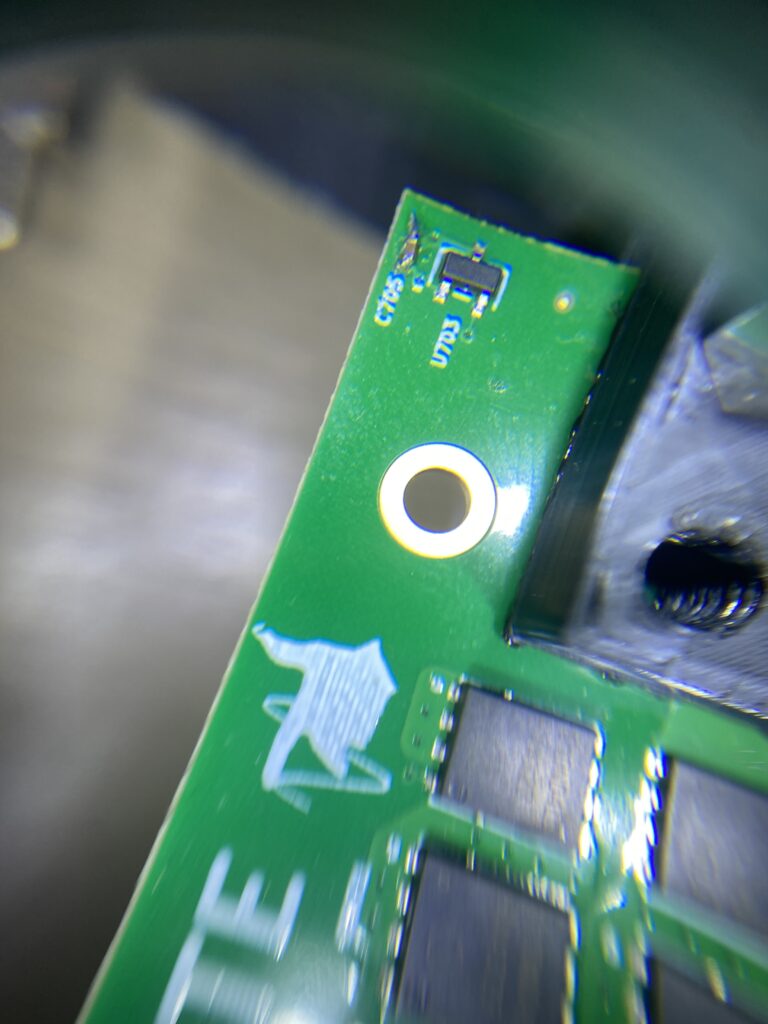
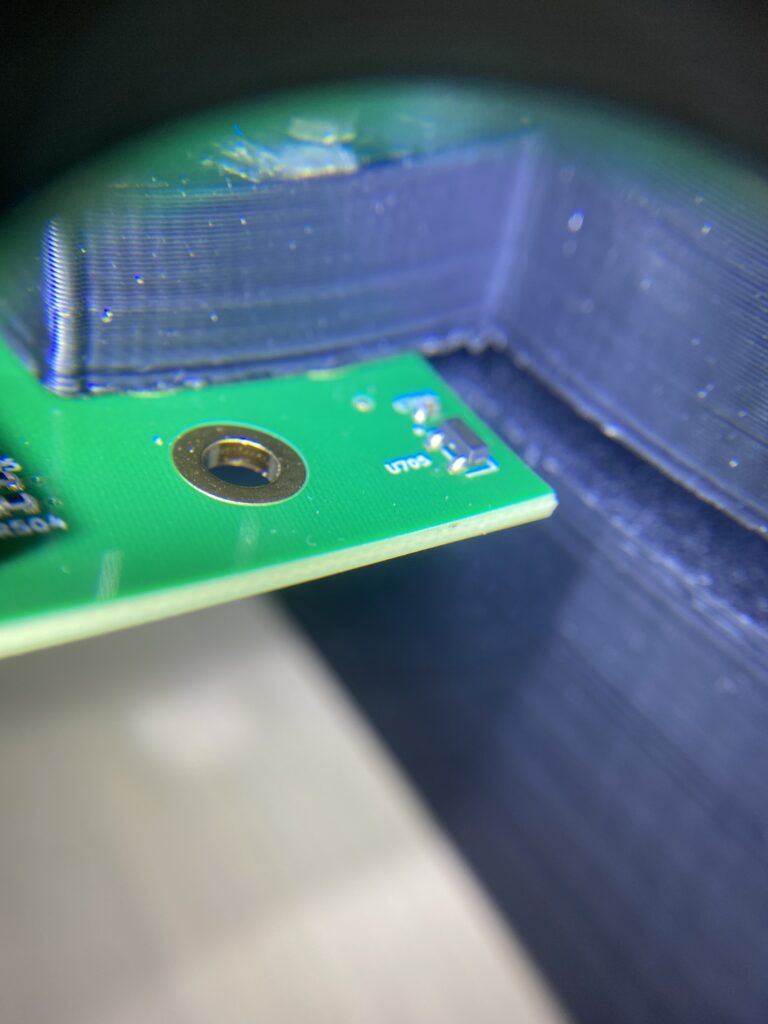
I placed two TMAG5321 sensors at the ends of my board.
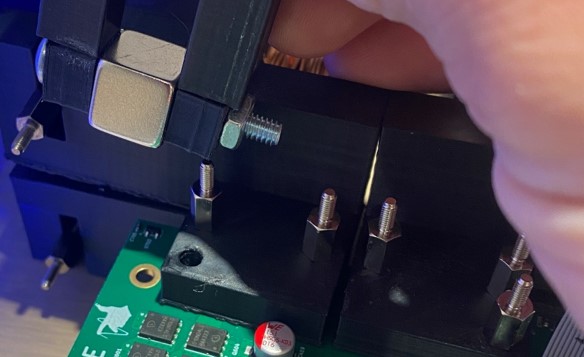
I brought my 1cm cube shaped neodymium magnet within 2cm of the sensors and my signal changed from 1 to 0 just as the datasheet described!
Get in touch with us
Are you looking to design and develop your own circuit boards? Contact us and let us help!